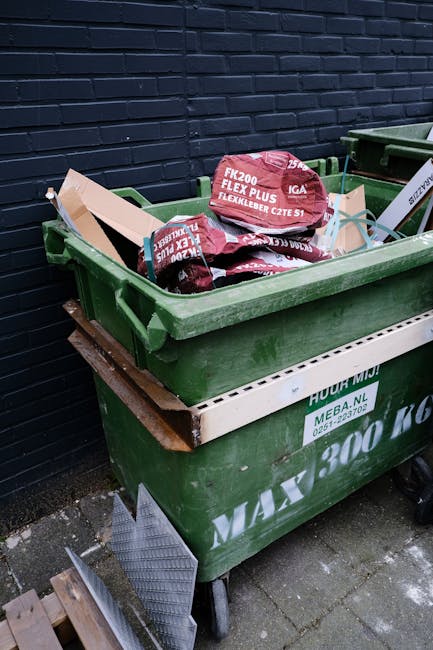
Safe Disposal of Bulky Waste After a Selsdon Move
Posted on 10/06/2026
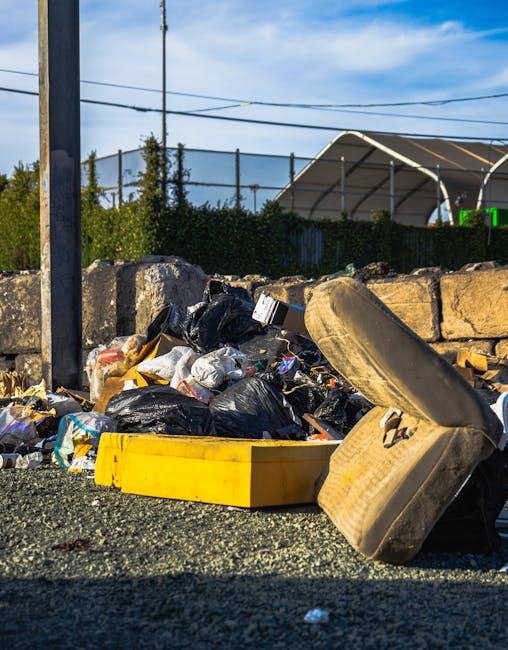
Moving house in Selsdon usually leaves you with one awkward question once the last box is inside: what do you do with the bulky waste that no longer fits your new life? Old wardrobes, tired sofas, broken beds, flat-pack leftovers, and that freezer you've been meaning to replace for ages can pile up fast. Safe disposal of bulky waste after a Selsdon move is not just about getting rid of clutter. It's about handling items properly, protecting yourself from injury, avoiding fly-tipping trouble, and making sensible choices for reuse, recycling, or responsible removal.
Truth be told, this is one of those jobs that looks easy until you're staring at a heavy corner sofa in a narrow hallway at 7.30pm. A good plan saves time, stress, and a lot of "why did we leave this until now?" moments. In this guide, you'll learn how bulky waste disposal works in practice, what options make the most sense after a move, where the common pitfalls are, and how to decide whether to reuse, store, recycle, donate, or remove items safely. If you're trying to keep the move calm and tidy too, it can help to read smart decluttering advice for moving day and a moving-out checklist for leaving a clean house alongside this article.
Why Safe Disposal of Bulky Waste After a Selsdon Move Matters
Bulky waste is different from everyday household rubbish. It's larger, heavier, more awkward, and often made from mixed materials such as wood, metal, foam, springs, fabric, and plastic. That mix makes it harder to move and harder to dispose of well. After a Selsdon move, you may also be dealing with a property deadline, end-of-tenancy pressure, limited parking, stairs, or neighbours who really do not want a sofa balanced on the pavement all afternoon. Understandable.
There's also the safety side. A bulky item can cause an injury in seconds if it slips, twists, or catches on a doorway. Even a "light" chest of drawers can become a problem when it's awkwardly shaped or carrying hidden weight. And then there's the environmental angle. Dumping items in the wrong place, or leaving them out without checking local collection rules, can create unnecessary waste and potential costs later on. A little planning avoids all that.
For many households, bulky waste disposal is part of the wider move-out process rather than a separate task. If you are already packing, lifting, and planning transport, it makes sense to think ahead about what will be kept, sold, recycled, or removed. Articles like efficient packing strategies for a smoother house move and moving without unnecessary stress fit neatly with that mindset.
Expert summary: The safest bulky-waste plans are the boring ones, honestly. Sort early, measure items, separate reusable pieces from genuine waste, and use a removal method that matches the item's size, weight, and condition. That's usually where the least stress lives.
How Safe Disposal of Bulky Waste After a Selsdon Move Works
The process is simpler when you break it into stages. First, identify each bulky item and decide whether it is reusable, recyclable, repairable, or true waste. Second, check how it will leave the property safely. Third, choose the right disposal route based on condition, access, timing, and urgency. It sounds basic, but that little framework stops a lot of bad decisions.
In practical terms, bulky waste after a move usually falls into a few familiar categories:
- Large furniture such as sofas, armchairs, wardrobes, tables, and bed frames
- White goods, including washing machines, tumble dryers, and fridges
- Mattresses and divan bases
- Mixed material items like shelving units and office furniture
- Renovation leftovers or packaging that is too large for standard bins
Some items can be dismantled before disposal. That often makes them safer to carry and easier to sort into recyclable parts. A bed frame, for example, may come apart into panels and slats. A wardrobe may split into sections. But do not rush this stage. Take photos first, keep fixings in labelled bags, and work methodically. If you're unsure about dismantling, especially with heavier pieces, the advice in bed and mattress moving tips can be surprisingly useful because the same handling logic applies.
There's also the transport question. Not every bulky item should be carried by hand the full way. Hallways, stairs, wet pavements, and parked cars can create awkward trip hazards. When the item is large or difficult to manoeuvre, using the right vehicle and enough hands matters. It really does. In some homes, a compact van and a careful two-person lift is enough; in others, you'll want a more structured approach, especially for furniture or mixed loads. If you are weighing up transport support, it may be worth looking at man and van support in Selsdon or furniture removals in Selsdon as part of your planning.
Key Benefits and Practical Advantages
Safe disposal is not only about avoiding mistakes. It also makes the rest of the move smoother. Once bulky items are dealt with properly, you get more space, fewer obstacles, and a clearer sense of progress. That matters more than people expect. A room that once felt cluttered suddenly feels manageable again, and that alone can reduce the emotional drag of moving day.
Here are the main advantages:
- Reduced injury risk: fewer heavy lifts, less twisting, and fewer rushed carries through doorways.
- Better organisation: you can sort keep, donate, recycle, and dispose with less last-minute panic.
- Cleaner handover: useful when you're leaving a rented property or selling a home.
- Less waste: items that can be reused or recycled are less likely to be thrown away too early.
- More usable space: once the bulky items are gone, packing and cleaning become easier.
There's a practical money angle too. It can be cheaper to plan disposal at the same time as a move than to leave it as a separate emergency job later. That might mean bundling removals, storage, and disposal together, or at least booking them in a sensible order. If you're comparing options, pricing and quotes is the kind of page people often check once they know what needs moving or removing.
And a small but important benefit: once bulky waste is sorted, you stop re-visiting the decision. No more "should we keep the old sideboard just in case?" three weeks later. Let's face it, that sideboard rarely gets a happy ending.
Who This Is For and When It Makes Sense
This topic matters to a wide range of people. If you've just moved into a new flat and discovered that the old sofa does not fit through the stairwell, it matters. If you're clearing a family home, replacing furniture, or downsizing after a long tenancy, it matters even more. It also matters for landlords, letting agents, students, and anyone trying to leave a property in good order.
Safe bulky-waste disposal is especially useful in these situations:
- End of tenancy: when you need the place empty and tidy by a fixed date
- Downsizing: when the new home has less room for large items
- Breakages during a move: when damaged items are no longer worth keeping
- New furniture arriving: when old items have to go quickly
- Student moves: when cheap, fast, and safe removal is the real goal
- Office or home-office changes: when desks, chairs, and filing units need clearing out
If you are moving from a flat, access can be the deciding factor. Narrow stairs, shared entrances, and limited lift space often change what is realistic. In that case, it is wise to plan the disposal route before moving day rather than after. For anyone dealing with tighter access, flat removals in Selsdon and packing for flats on local roads can give you a better feel for the kind of planning that helps.
Step-by-Step Guidance
Here is a practical way to handle bulky waste after a move without turning the job into a weekend-long headache.
- List every bulky item. Walk through the property room by room. Note the item, its condition, and whether it can be reused or dismantled.
- Decide its next life. Ask a simple question: keep, sell, donate, store, recycle, or dispose? If the answer is unclear, take ten minutes and decide before lifting anything.
- Measure access points. Check doors, stair turns, lifts, and corridors. A lot of "impossible" items are only impossible because nobody measured properly.
- Separate materials where possible. Metal, wood, and clean cardboard may be better handled separately. Foam-stuffed pieces and damaged mattresses usually need a different route.
- Prepare the item for moving. Remove loose cushions, shelves, drawers, glass parts, and anything that could shift in transit.
- Use safe lifting technique. Bend at the knees, keep the item close to your body, and move slowly. If the item is too heavy or awkward, stop there. No heroics required.
- Choose the removal method. This may be a booked bulky waste collection, a van-assisted removal, or a recycling-focused clearance. Pick the method that fits the item, not the other way round.
- Check the final state. Make sure nothing has been left behind in sheds, cupboards, lofts, or communal spaces.
When in doubt, treat the item like a moving problem first and a waste problem second. That order tends to keep people safer. If the lifting is more than you want to take on, a guide like the science behind safe lifting or tips for handling heavy lifts carefully can help you understand the mechanics better.
One small but useful habit: take a quick photo of bulky items before disposal if there is any chance you'll need a record later. It sounds a bit dull, but future-you may appreciate it.
Expert Tips for Better Results
Good bulky-waste disposal is mostly about judgement. Not every item should be treated the same way. The old sofa with one torn seam might be suitable for donation or rehoming, while a water-damaged mattress probably is not. The trick is to be honest about condition, weight, and handling risks.
- Plan disposal before the final packing day. Waiting until the van is loaded usually means stress and shortcuts.
- Keep screws and fittings in labelled bags. This helps if an item is being dismantled for reuse or recycling.
- Protect floors and walls. Cardboard corners or blankets can prevent scuffs in narrow hallways.
- Check whether the item can be broken down safely. Some furniture dismantles well; some does not. If it creaks, cracks, or looks unstable, stop.
- Match the method to the urgency. If you need a fast turnaround, same-day support may be better than waiting around for a later collection.
- Think about storage if you are undecided. If you are not sure whether to keep an item, short-term storage can buy you time.
If you want to avoid making rushed disposal decisions, a little breathing space helps. That is where storage in Selsdon can be useful, especially for items you are not ready to part with yet. And if you are keeping furniture temporarily, this article on sofa storage strategies is worth a look.
Another tip that often gets overlooked: do not stack multiple bulky items in one go unless the route is clear and the load is balanced. It is tempting to "save time." Usually that creates extra time later, plus more bruises. Nobody wants that.
Common Mistakes to Avoid
Most bulky-waste problems come from rushing or assuming that "someone will sort it later." Spoiler: later often means harder, heavier, and more expensive.
- Leaving disposal until moving day: this creates pressure and often leads to unsafe lifting.
- Trying to force oversized items through tight spaces: that is how doors get scratched and backs get annoyed.
- Mixing reusable items with damaged waste: it makes sorting harder and may reduce what can be recovered.
- Ignoring hidden weight: drawers, damp materials, and solid frames can be much heavier than expected.
- Assuming a bulky item is automatically recyclable: mixed materials often need separation or specialist handling.
- Leaving items on the pavement without checking collection arrangements: this can create problems, especially if the item is not accepted or not collected on time.
Another common one is forgetting the exit route. People focus on the item, not the route. Then it hits a bannister, catches on a shoe rack, and the whole operation stalls. A tiny bit of route planning saves a lot of drama.
And yes, one more thing: don't rely on "we'll just lift it together" if the item is too bulky for the available space. That sentence has caused more frustration than most people admit.
Tools, Resources and Recommendations
You do not need fancy gear to dispose of bulky waste safely, but a few practical tools make life easier.
- Work gloves: useful for grip, splinters, and rough edges
- Blankets or furniture covers: protect the item and the property
- Straps or tape: keep doors shut and loose parts together
- Trolley or sack truck: helpful for stable, heavy items if the route allows it
- Basic toolkit: screwdriver, Allen key, and pliers for dismantling
- Label stickers or marker pens: for identifying item parts and fixings
- Heavy-duty sacks or wrap: for loose components and mixed waste
On the planning side, a few company pages can help you think through the wider move, not just the disposal job. For example, the services overview gives a broad sense of what removal support can cover, while removal services in Selsdon and removals in Selsdon may be useful if bulky waste is part of a larger house clearance.
If you are dealing with an especially awkward item, such as a piano or very heavy appliance, specialist handling matters. These are not the jobs to improvise. There is a good reason articles like why DIY piano moving is risky exist. They are heavy, fragile, and expensive to get wrong.
Law, Compliance, Standards, or Best Practice
In the UK, the safest approach is to make sure waste is handed to a responsible carrier or collection service and is not left where it could be classed as fly-tipping or an obstruction. The exact local rules can vary, so it is sensible to check what your borough expects for bulky collections, kerbside placement, and booking windows. If you are living in rented accommodation, your tenancy agreement may also set out how you must leave the property and what counts as acceptable waste removal.
Best practice usually means three things: traceability, safety, and appropriate sorting. Traceability means you know who is taking the waste and where it is going. Safety means items are handled without creating injury or property damage. Sorting means you do not send recyclable material to the wrong route if a better option exists.
For items like fridges and freezers, there can be extra handling considerations because of size, weight, and potential waste components. If one of those is in your moving pile, it is worth reading advice on handling freezers temporarily before you decide whether to move, store, or dispose of it. Also, if you are using a removal provider, it is sensible to ask how they manage safety and insurance. The pages on insurance and safety and health and safety policy are the kind of references people often want when they are comparing providers and checking standards.
One practical note: if a collection or removal service is involved, make sure the item description is accurate. A sofa is not just "a sofa" if it is waterlogged, split at the base, or missing its removable sections. That detail changes the handling plan. Quite a bit, actually.
Options, Methods, or Comparison Table
There is no single correct method for bulky waste disposal after a move. The right choice depends on time, condition, access, and whether the item has any resale or reuse value. Here is a simple comparison to help you decide.
| Method | Best for | Pros | Watch out for |
|---|---|---|---|
| Reuse or donation | Good-quality furniture and usable household items | Reduces waste, may help others, often low cost | Needs items to be clean and in acceptable condition |
| Sell privately | Items with market value, especially furniture and appliances | Can offset moving costs | Time-consuming; collection logistics can be awkward |
| Dismantle and recycle | Mixed-material furniture that can be separated | Can reduce disposal volume and improve sorting | Requires tools, time, and care |
| Book a bulky waste collection | Standard large items that need a straightforward removal route | Simple and direct | Availability and item restrictions vary |
| Use a removal or clearance service | Multiple bulky items, tight timescales, awkward access | Less physical effort, better for heavy or awkward loads | Needs clear instructions and accurate item list |
For many people moving in Selsdon, the best answer is a blend: donate what is usable, recycle what can be separated, and use a professional service for the truly awkward bits. That mix keeps things practical rather than ideological, which is usually how real life works anyway.
Case Study or Real-World Example
Here is a realistic example based on the sort of move people often face. A couple moves from a two-bedroom flat into a smaller house in Selsdon. They have an old three-seat sofa, a bed frame, a broken chest of drawers, two dining chairs, and a small freezer they no longer need. Initially, everything is piled in the hallway because they planned to "deal with it after the boxes were in." Classic moving-day optimism.
Once they stop and sort the items, the picture becomes clearer. The sofa is still in decent shape, so it is cleaned and set aside for rehoming. The bed frame comes apart with a basic toolkit. The chest of drawers is damaged beyond sensible repair, so it is earmarked for disposal. The freezer is checked carefully because it is bulky, awkward, and needs proper handling. The chairs are light enough to move easily and are offered for collection by a family member.
Instead of doing everything in one rushed sweep, they split the job over two days. The first day is for sorting and dismantling. The second is for removal and final clearing. That small change makes a huge difference. No back strain, no blocked doorway, no panic. Just steady progress.
If they had wanted to keep the freezer for a while, a short-term storage decision might also have made sense. That is where temporary freezer storage guidance and sofa storage advice could support a more flexible plan.
Practical Checklist
Use this checklist before you move bulky items out of your Selsdon property.
- Identify every bulky item room by room
- Decide whether each item will be kept, sold, donated, stored, recycled, or disposed of
- Measure doorways, stair turns, lifts, and vehicle access
- Check whether items can be dismantled safely
- Remove loose parts, cushions, drawers, and fixings
- Pack screws and small fittings in labelled bags
- Protect floors, corners, and bannisters
- Make a clear path from the item to the exit
- Use the right lifting method and enough people
- Arrange transport or collection in advance
- Keep fragile or reusable parts separate from waste
- Confirm the property is fully clear before handover
If you want a cleaner final exit, this pairs well with a clean-house move-out checklist and a solid packing plan. A little structure goes a long way, especially when the house is echoing and everything smells faintly of cardboard and dust.
Get a free quote today and see how much you can save.
Conclusion
Safe disposal of bulky waste after a Selsdon move is really about making one sensible decision after another. Sort early. Lift carefully. Measure access. Reuse what still has value. Recycle when you can. Dispose responsibly when you must. That steady approach protects your property, your back, and your peace of mind.
It also keeps the move feeling finished, which matters more than people admit. There is a real relief in standing in an empty room knowing nothing awkward is left hiding in the corner. No half-dealt-with sofa. No old mattress leaning in the garage. Just a proper fresh start.
If your move has left you with bulky items you do not want to wrestle alone, take the time to choose the route that fits the item, the property, and your timeline. That is the safest way, and usually the calmest too. Small decisions, properly made, make the biggest difference. Funny how often that turns out to be true.